
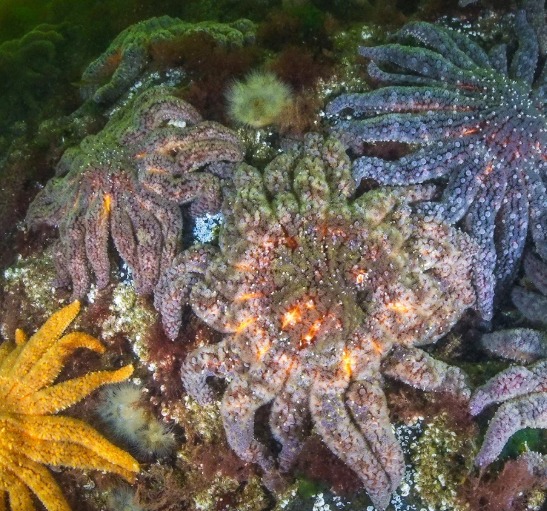
- Since 2013, the Pacific coast has faced a devastating marine crisis with the outbreak of Sea Star Wasting Disease (SSWD), which has led to the death of over 5 billion sea stars from Mexico to Alaska.
- A recent scientific breakthrough has finally identified the bacterium Vibrio pectenicida as the cause, paving the way for potential conservation strategies.
Outbreak Details and Impact:
- The disease spread rapidly, with infected sea stars showing white lesions, twisting and detaching limbs, and rapid tissue decay, eventually turning into mush within days.
- The sunflower sea star (Pycnopodia helianthoides) suffered the worst, with an estimated 90–94% population loss in just five years. In California, 99% of sunflower sea stars disappeared.
Cause Identified:
- Researchers discovered that Vibrio pectenicida, a bacterium known to infect shellfish, was present in high concentrations in the coelomic fluid of diseased sea stars but absent in healthy ones.
- Previous studies failed to detect it as they primarily examined dead or decaying tissue, missing the live bacterial activity.
- This finding marks a significant advance in marine disease research and offers hope for the restoration of sea star populations and the stability of marine ecosystems, where these predators play a key ecological role.