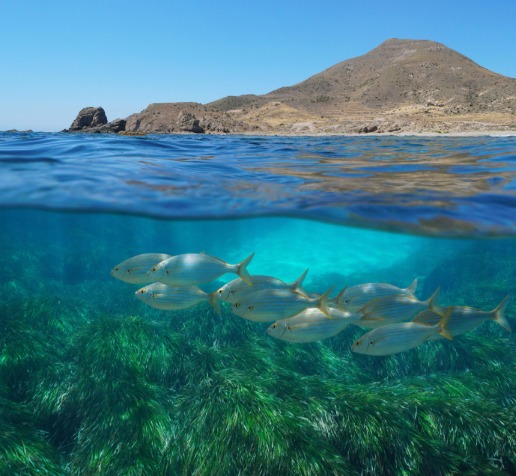
- Blue Carbon, a term used to describe the carbon captured and stored in coastal and marine ecosystems, is receiving increased global attention for its potential in mitigating climate change.
- These ecosystems—particularly mangrove forests, salt marshes, and seagrass meadows—act as highly efficient carbon sinks, storing vast amounts of carbon dioxide in both their biomass and underlying soils.
- Unlike terrestrial forests, blue carbon ecosystems can store carbon for centuries in underwater sediments due to slower decomposition.
- This makes them especially important in addressing the dual challenges of rising greenhouse gas emissions and climate adaptation. The majority of oceanic carbon storage comes from dissolved CO₂ in seawater, but coastal ecosystems play a critical role in long-term sequestration.
- Recent discussions have also highlighted seaweed farming as a potential new source of blue carbon storage. Seaweed absorbs CO₂ rapidly and grows quickly, offering opportunities for large-scale carbon removal.
- However, researchers caution that empirical data on long-term burial and storage from seaweed farms remains limited, pointing to the need for scientific validation before scaling up.
- The conservation and restoration of blue carbon ecosystems provide multiple benefits they help mitigate climate change, protect coastal communities from storm surges and erosion, support fisheries and biodiversity, and improve water quality. Yet, these ecosystems face significant threats from coastal development, pollution, and rising sea levels, which could release stored carbon back into the atmosphere, worsening global warming.
- Policymakers and environmental agencies are increasingly incorporating blue carbon into climate strategies, carbon markets, and national commitments under the Paris Agreement.
- Experts stress that protecting and restoring blue carbon ecosystems is not only a cost-effective climate solution but also a crucial step towards achieving global sustainability goals.
Limited-time offerGet up to 75% OFFGrab the offer
Blue Carbon Ecosystems Gain Global Attention for Climate Mitigation
Mangroves, seagrasses, and salt marshes emerge as vital natural carbon sinks; seaweed farming explored as a new strategy.
Check your eligibility now