
Latest Update:
- With the Indian carbon market expected to go live in 2026, biochar—a carbon-rich byproduct from organic waste—is projected to become a key tool in achieving carbon removal targets.
- Its potential as a long-term carbon sink makes it crucial for meeting India’s climate goals.
About Biochar:
Definition:
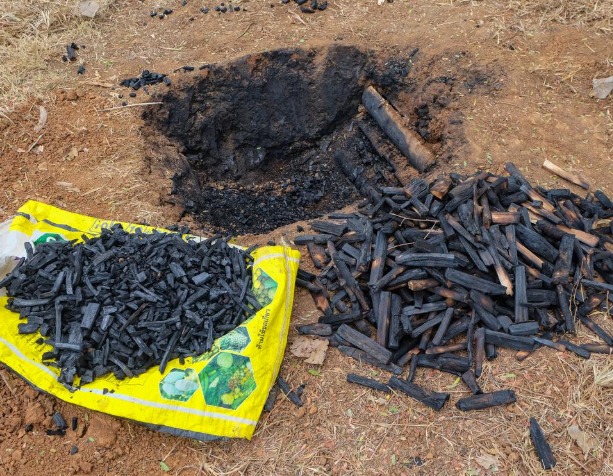
- A granular, carbon-rich material produced by heating crop residues or organic municipal solid waste between 400°C and 600°C in a low-oxygen kiln.
Purpose:
- Captures and stores carbon dioxide (CO₂)
- Provides a sustainable alternative to waste management and carbon sequestration
Carbon Sequestration:
- Biochar can store carbon in soil for 100 to 1,000 years, making it a durable and stable carbon sink
Potential Applications of Biochar:
Agriculture:
- Enhances soil fertility and water retention
- Restores degraded soils
- Reduces nitrous oxide (N₂O) emissions by 30–50%
Industries:
- Modified biochar can adsorb CO₂ from industrial exhaust
- Currently lower efficiency than traditional carbon capture methods but offers cost benefits
Construction Sector:
- Potential for use as a low-carbon material
- Converts building materials into stable carbon sinks
Wastewater Treatment:
- Serves as a low-cost filtration medium to reduce water pollution
Relevance to Indian Carbon Market:
- As India moves toward a carbon credit system, biochar can offer:
- Low-cost CO₂ removal
- Rural employment opportunities through biomass collection and biochar production
- Climate-resilient agriculture practices