
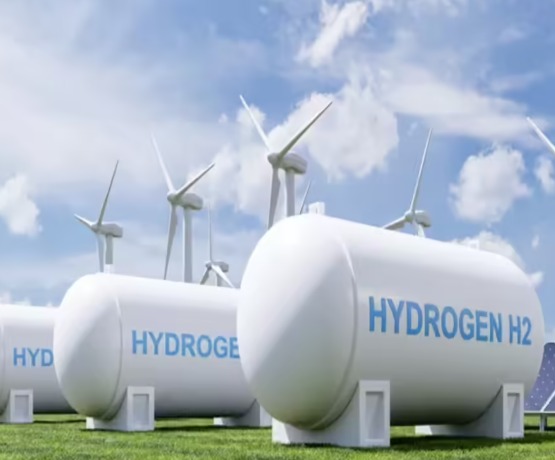
National Green Hydrogen Mission and India’s Energy Transition
- Launched on January 4, 2023, by the Union Cabinet, the National Green Hydrogen Mission (NGHM) aims to position India as a global hub for the production, utilization, and export of green hydrogen and its derivatives.
- With a budgetary outlay of ₹19,744 crore until 2029–30, the mission is a cornerstone of India’s strategy to achieve energy independence by 2047 and net-zero emissions by 2070.
Progress and Developments in 2025:
- Pilot Projects and Funding: In July 2025, the Ministry of New and Renewable Energy (MNRE) issued guidelines for funding testing facilities, kits, and skill development under the NGHM. The National Institute of Solar Energy (NISE) was appointed as the Scheme Implementation Agency (SIA) to oversee quality and performance testing for green hydrogen (GH2) production.
- SIGHT Programme: The Strategic Interventions for Green Hydrogen Transition (SIGHT) programme has progressed with tenders worth ₹17,500 crore issued in 2024–25 for electrolyser manufacturing (1.5 GW capacity) and green hydrogen production (4.1 lakh tonnes annually). In July 2025, 12 companies, including Reliance and Adani, were allocated 2,97,250 tonnes of green hydrogen production capacity, with incentives up to ₹50/kg.
- Green Hydrogen Hubs: Regions like Odisha, Andhra Pradesh, and Gujarat are being developed as green hydrogen hubs, leveraging port proximity and renewable energy potential. Odisha’s Paradip hub aims for 1 MMT of green ammonia by 2030.
- Global Engagement: India’s leadership in the International Partnership for Hydrogen and Fuel Cells in the Economy (IPHE) in 2025 and its push for green hydrogen in steel (4 pilot plants approved) and shipping (2 projects funded) highlight its global ambitions.
- Budget and Targets: The mission targets 5 MMT of annual green hydrogen production by 2030, supported by 125 GW of renewable energy capacity, with an interim goal of 10 MMT hydrogen production and 60–100 GW electrolyser capacity.
About the National Green Hydrogen Mission:
- Objective: To make India a global leader in green hydrogen production, utilization, and export, reducing carbon emissions and fossil fuel imports by ~50 MMT annually and saving ₹1 lakh crore in import costs by 2030.
- Budget: ₹19,744 crore until 2029–30, with ₹200 crore allocated for testing facilities and skill development until 2025–26.
- Implementing Agency: National Institute of Solar Energy (NISE) oversees testing, quality assurance, and scheme implementation.
- Key Outcomes:
- Create export markets for green hydrogen and derivatives like green ammonia and methanol.
- Decarbonize sectors like steel, shipping, and transport.
- Generate 6 lakh jobs and attract ₹8 lakh crore in investments by 2030.
Components of the Mission:
- Strategic Interventions for Green Hydrogen Transition (SIGHT) Programme:
- Electrolyser Manufacturing: Financial incentives to boost domestic production of electrolysers, targeting 1.5 GW capacity annually. Incentives range from ₹4,440/kW to ₹2,220/kW over five years, with tenders awarded to companies like Reliance and John Cockerill.
- Green Hydrogen Production: Incentives for producing 4.1 lakh tonnes/year, with contracts awarded to 12 companies in July 2025. Supports cost reduction to $1–2/kg by 2030, enhancing competitiveness.
- Pilot Projects:
- Supports trials in emerging sectors like steel (4 projects), shipping (2 projects), and green ammonia production (2 MMT capacity by 2030).
- Explores diverse production pathways, including biomass-based hydrogen.
- Green Hydrogen Hubs:
- Identifies regions with high renewable energy potential (e.g., Gujarat, Odisha) for large-scale production and utilization.
- Integrates ports, refineries, and industrial clusters for efficient supply chains.
- R&D Framework (Strategic Hydrogen Innovation Partnership – SHIP):
- Public-private partnership to fund research in electrolyser efficiency, storage, and fuel cell technologies.
- Aims to develop indigenous technologies and reduce production costs.
- Skill Development:
- Coordinated programme to train 10,000+ professionals in green hydrogen technologies, including production, storage, and safety.
- Collaborates with institutions like IITs and industry for capacity building.
- Testing and Quality Assurance:
- Funds development of testing facilities to ensure quality, safety, and sustainability in green hydrogen production and trade.
- NISE oversees certification, performance testing, and standardization to meet global benchmarks.
Strategic and Economic Significance:
- Energy Transition: Green hydrogen, produced via renewable-powered electrolysis, supports India’s net-zero goal by decarbonizing hard-to-abate sectors like steel, cement, and transport.
- Economic Impact: Expected to attract ₹8 lakh crore in investments, create 6 lakh jobs, and reduce fossil fuel imports, saving ₹1 lakh crore annually by 2030.
- Global Leadership: India’s low-cost renewable energy (₹2.5–3/kWh) and ambitious targets position it to capture 10% of the global green hydrogen market by 2030, with exports to Europe, Japan, and South Korea.
- Climate Goals: Aligns with India’s Paris Agreement commitments, reducing CO2 emissions by 50 MMT annually.
Challenges:
- Cost Barriers: Green hydrogen production costs ($4–6/kg) remain higher than grey hydrogen ($1–2/kg), requiring subsidies and technological advancements.
- Infrastructure Needs: Scaling up renewable energy (125 GW), electrolyser capacity, and storage infrastructure demands significant investment and land allocation.
- Policy Gaps: Lack of mandatory blending norms and limited domestic demand hinder adoption in industries like refining and fertilizers.
- Safety and Standards: Ensuring safe handling and transport of hydrogen requires robust regulations and trained personnel.
- Environment and Climate Change: NGHM is central to India’s net-zero by 2070 and renewable energy expansion, aligning with SDG 7 (Affordable and Clean Energy).
- Energy Security: Reduces reliance on imported fossil fuels, enhancing energy independence.
- International Relations: India’s leadership in IPHE and export ambitions strengthen its role in global energy markets, relevant to India’s ties with energy-importing nations.
- Science and Technology: Advances in electrolyser and fuel cell technologies highlight India’s focus on indigenous innovation.
- Public Policy: Balancing subsidies, private investment, and regulatory frameworks is a key governance challenge.
Conclusion:
- The National Green Hydrogen Mission is a transformative step toward making India a global leader in green hydrogen, driving decarbonization, job creation, and energy security.
- With significant progress in 2025, including SIGHT tenders and pilot projects, the mission leverages India’s renewable energy advantage to build a sustainable energy ecosystem.