
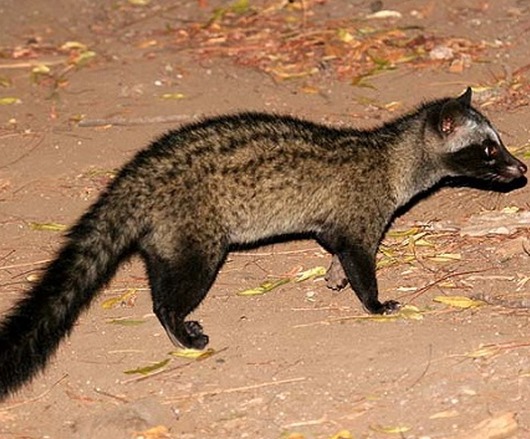
- The proceedings in Chamber 1 of the Kerala High Court were disrupted due to a foul stench caused by an Asian Palm Civet.
- The animal’s presence and the associated odor caused discomfort and interrupted court activities, bringing attention to this elusive nocturnal mammal in an unexpected urban setting.
About Asian Palm Civet
- Scientific Name: Paradoxurus hermaphroditus
- Other Names: Toddy Cat, Common Palm Civet
- Family: Viverridae (includes civets and mongooses)
- Distribution: Widely found across South and Southeast Asia, including India, Sri Lanka, Indonesia, and the Philippines.
Physical Features
- Small, slender, with a long body and short legs.
- Length: 53 to 71 cm including tail; Weight: 2 to 5 kg.
- Fur: Brownish-gray with black spots and distinctive white mask-like eye markings.
- Nocturnal and excellent climbers with a strong sense of smell.
Ecology and Behavior
- Omnivorous diet: insects, small mammals, fruits; notably able to digest coffee beans, important in some coffee industries.
- Nocturnal and arboreal, adept at climbing trees and foraging largely at night.
Conservation Status
- Classified as Least Concern on the IUCN Red List owing to its wide distribution and relatively stable population.