
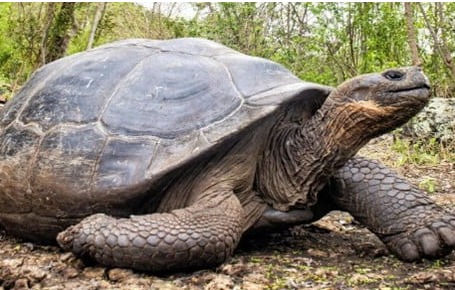
Asian Giant Tortoise:
- In a significant conservation milestone, the Asian Giant Tortoise (Manouria emys phayrei) — the largest tortoise in mainland Asia — has been reintroduced into the Zeliang Community Reserve in Nagaland’s Peren district.
- This marks a key intervention aimed at restoring populations of critically endangered species in the region.
About the Asian Giant Tortoise:
- Scientific Name: Manouria emys phayrei
- Common Name: Asian Giant Tortoise
- Unique Fact: Believed to be among the oldest tortoise lineages on Earth.
- Rare Behavior: Shares a trait with crocodilians — protecting eggs and regulating nest temperature, which is unusual for tortoises.
Physical Characteristics:
- Hatchlings: Greyish brown in colour.
- Adults: Mature into dark charcoal shades, with a large, dome-shaped shell.
Habitat & Distribution:
- Natural Habitat
- Found in tropical and subtropical hill forests.
Geographical Range:
- India (Northeast region, especially Nagaland)
- Bangladesh
- Indonesia
- Malaysia
Diet:
- Primarily herbivorous, consuming
- Bamboo shoots
- Tubers
- Juicy vegetation
- Occasionally eats
- Invertebrates and frogs
Conservation Status:
- IUCN Red List: Critically Endangered (CR)
- CITES: Appendix II
Major Threats:
Habitat destruction due to:
- Urban expansion
- Road and infrastructure construction
- Slash-and-burn (jhum) cultivation
- Low reproductive rate, making recovery efforts slower