Why in News
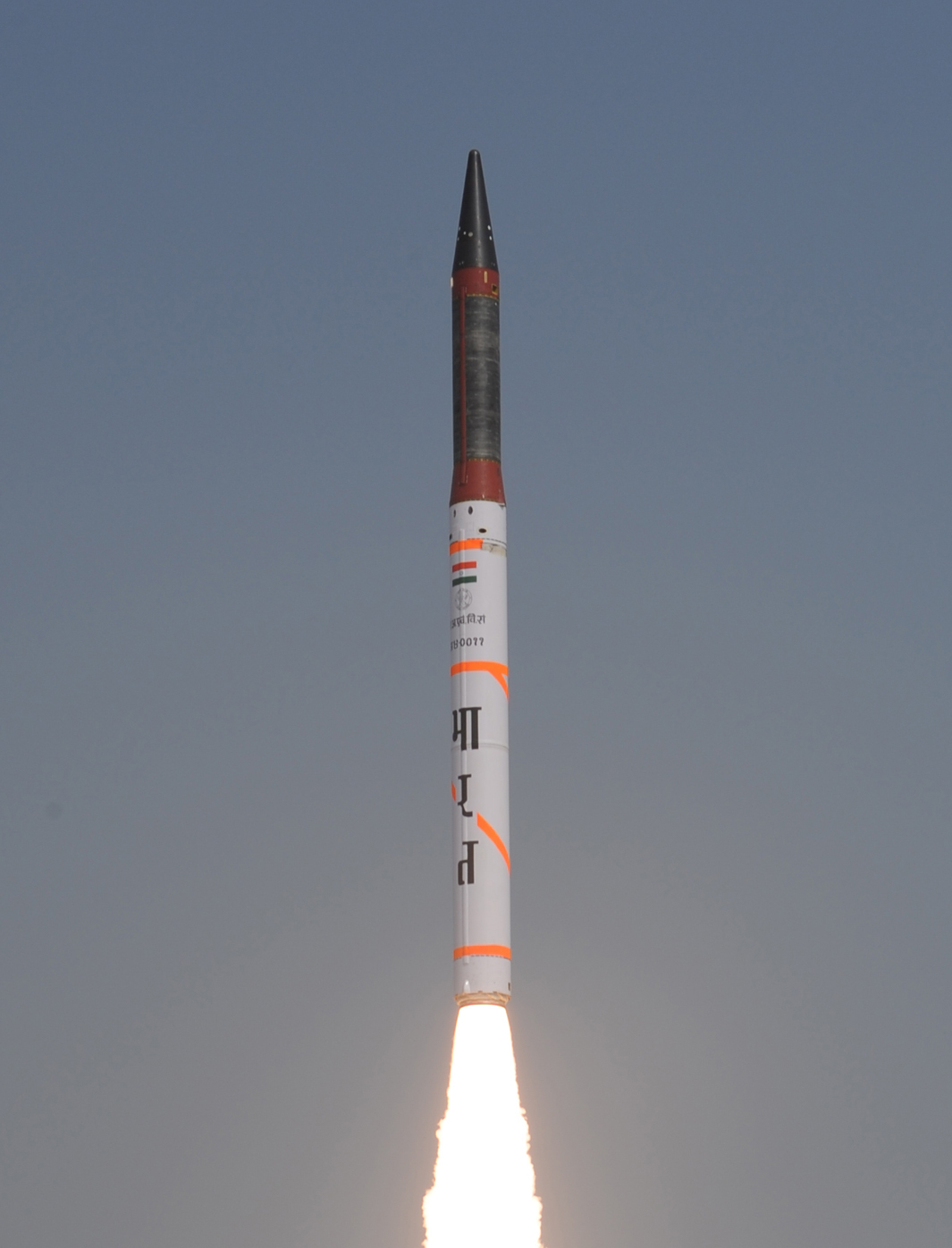
India has successfully test fired Agni-4 Medium-Range Ballistic Missile (MRBM). The test- firing process revealed that the operational requirements of the missile were met with .
Importance
- This achievement strengthens India’s credible minimum deterrence.
- Demonstrates the reliability and preparedness of India's strategic missile forces.
- It provides India with an extended-range ballistic missile capability.
- It reflects continued advancement in India's indigenous missile development programme.
Key Highlights
- Range:Approximately 4,000 km
- Payload upto 1,000 kg
- Under Strategic Forces Command (SFC)
- It was tested at Integrated Test Range (ITR), Chandipur, Odisha
- Developed by Defence Research and Development Organisation (DRDO)
- Nuclear capable surface to surface ballistic missile.
About Agni-4
Agni-4 ballistic missile falls under the category of Medium Range Ballistic Missile (MRBM) and belongs to the Strategic Forces Command (SFC). Agni-4 has been developed as a part of Agni series of missiles which started with the development of a re-entry vehicle technology demonstrator and evolved into various ballistic missile systems with different ranges.
Agni Missile Family
- Agni-I: Agni-I is a single-stage, solid-fuelled ballistic missile with a range of approximately 700 to 900 kilometres.
- Agni-II: Two-stage, solid-propellant; range of ~2,500 km
- Agni-III: Range of ~3,500 km; strengthens strategic deterrence
- Agni-IV: MRBM; ~4,000 km range; 1,000 kg payload
- Agni-V: ICBM; three-stage solid propulsion; equipped with MIRV capability
Ballistic Missiles
Ballistic missiles are initially powered by rocket propulsion and subsequently follow a largely unpowered/free-falling trajectory towards the target.
Category Range
- SRBM: Below 1,000 km
- MRBM: 1,000–3,000 km
- IRBML: 3,000–5,500 km
- ICBM: Above 5,500 km