Why in News?
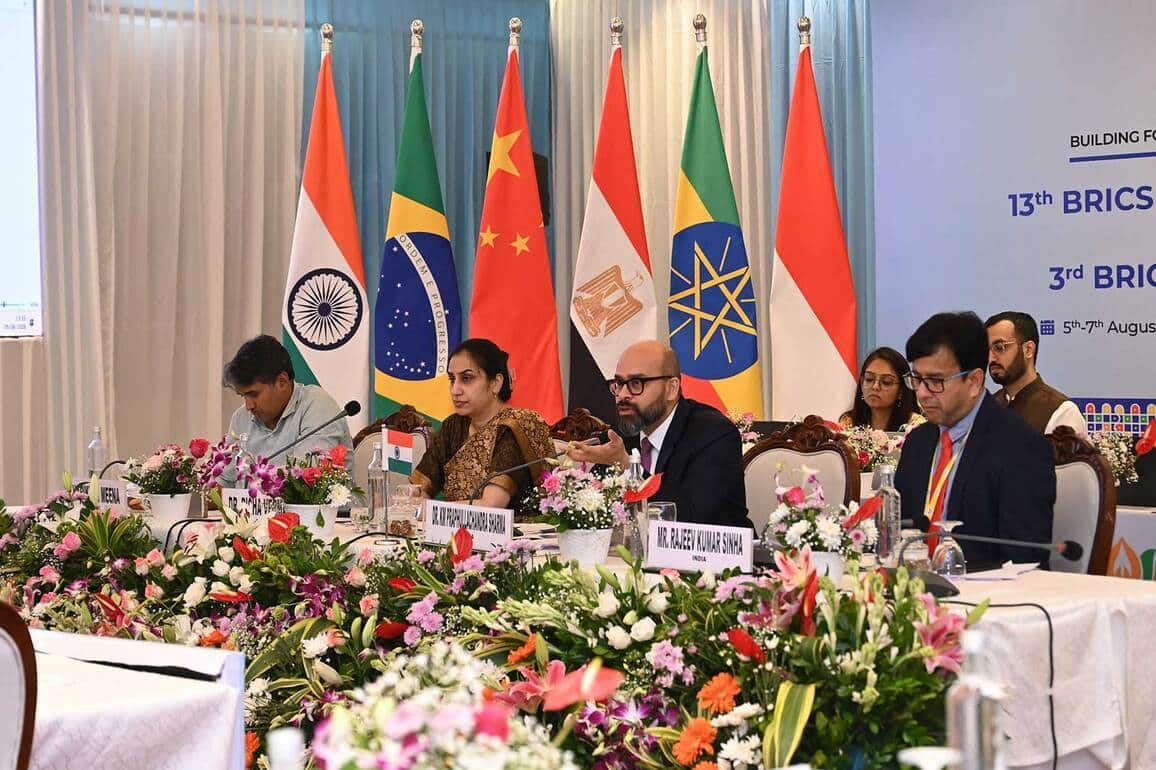
The 13th BRICS Education Ministers’ Meeting was held in Bhubaneswar, Odisha, under India’s BRICS Chairship 2026.
Key Highlights
The Declaration identified five priority areas for cooperation:
- Early Childhood Care and Education (ECCE) and Foundational Literacy and Numeracy (FLN): Promote universal access to quality early childhood education, improve school readiness and strengthen basic literacy and numeracy skills.
- Skill Development and TVET: Strengthen cooperation in Technical and Vocational Education and Training (TVET) through the BRICS TVET Cooperation Alliance.
- Research and Innovation: Promote joint research, start-ups and the safe and ethical use of Artificial Intelligence in education.
- Mutual Recognition of Qualifications: Continue discussions on an agreement to make it easier for students and professionals to pursue education and opportunities across BRICS countries.
- Academic Leadership: Promote faculty exchanges, scholarships, the BRICS Rectors’ Forum and cooperation among higher education institutions.
Traditional and Indigenous Knowledge
- India proposed the BRICS Guiding Principles on Strengthening Academic Collaboration on Traditional and Indigenous Knowledge Systems.
- The proposal aims to promote the study, preservation and sharing of traditional knowledge among BRICS countries.
- The BRICS Network University may consider traditional and indigenous knowledge as an additional International Thematic Group.
About BRICS Education Cooperation
- BRICS cooperation in education focuses on knowledge sharing, skill development, research and academic collaboration.
- The BRICS TVET Cooperation Alliance (BRICS-TCA) promotes cooperation in technical and vocational education.
- The BRICS Rectors’ Forum provides a platform for cooperation among higher education institutions.
- India is hosting BRICS meetings in different sectors during its 2026 Chairship.
Importance
- Strengthens cooperation among BRICS countries in the field of education and skill development.
- Focuses on making education systems inclusive, future-ready and people-centred.
- Promotes cooperation in research, innovation, AI and start-ups.
- Supports greater academic and student mobility through mutual recognition of qualifications.
- Gives importance to traditional and indigenous knowledge systems.