Why in News?
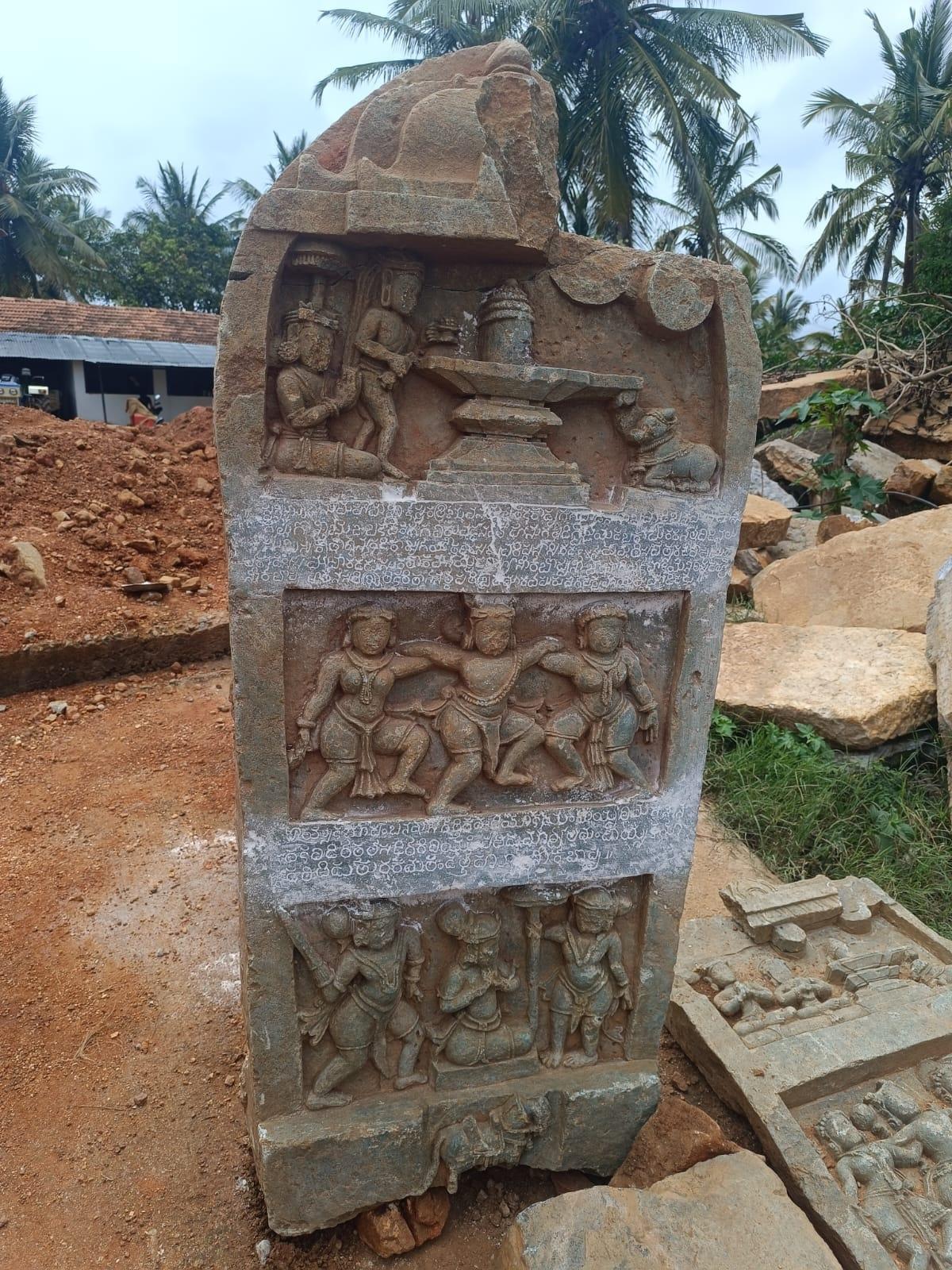
A 12th-century Veeragallu (hero stone) found at Neeragunda in Arsikere taluk of Hassan district, Karnataka, has provided new information about the last days of Hoysala ruler Vishnuvardhana. The Kannada inscription on the stone mentions the death of a Hoysala soldier shortly after the death of Vishnuvardhana. The inscription has helped historians identify 11 December 1141 as the likely date of Vishnuvardhana’s death.
Importance
- The inscription provides important epigraphical evidence about the chronology of the Hoysala dynasty.
- It helps clarify the long-standing debate over the date of death of King Vishnuvardhana.
- The Veeragallu gives information about the Garuda tradition of the Hoysalas.
- It shows the importance of inscriptions in reconstructing the history of medieval South India.
- The discovery also provides information about the military and social traditions of the Hoysala period.
Key Highlights
- The Veeragallu was found at Neeragunda village in Hassan district, Karnataka.
- It carries an inscription in the Kannada language.
- The inscription records the death of a Hoysala soldier after the death of Vishnuvardhana.
- It mentions Bankapura, where Vishnuvardhana is believed to have died.
- The inscription indicates 11 December 1141 as the date of Vishnuvardhana’s death.
- The evidence is important because different dates have previously been suggested for the ruler’s death.
- The inscription is also linked to the Garuda tradition, associated with the loyalty of Hoysala warriors towards their king.
Static Facts
- Veeragallu: Memorial stone raised in memory of a person who died a heroic death.
- Other name: Hero Stone
- Dynasty: Hoysala
- Ruler: Vishnuvardhana
- Period: 12th century
- Language of inscription: Kannada
- Location: Neeragunda, Arsikere taluk, Hassan district, Karnataka
- Date indicated for Vishnuvardhana’s death: 11 December 1141
- Important place mentioned: Bankapura
About King Vishnuvardhana
- Vishnuvardhana was one of the important rulers of the Hoysala dynasty.
- He ruled during the 12th century and expanded Hoysala power in parts of present-day Karnataka.
- He fought against regional powers, including the Cholas, and strengthened the Hoysala kingdom.
- His reign was also an important period for the development of Hoysala art and temple architecture.
- The Hoysala period is known for its detailed sculptures and distinctive temple architecture.
- Important Hoysala monuments include the temples at Belur, Halebidu and Somanathapura.
- The Sacred Ensembles of the Hoysalas were added to the UNESCO World Heritage List in 2023.
About Veeragallu
- Veeragallu was traditionally erected to honour warriors or other individuals who died while performing a heroic act.
- Such stones often contain sculptures and inscriptions describing the person, the event and the ruler of the period.
- They are important sources for understanding the political, military and social history of medieval India.
- Inscriptions found on these stones can also provide information about rulers, battles, dates and local administration.