
Why in News?
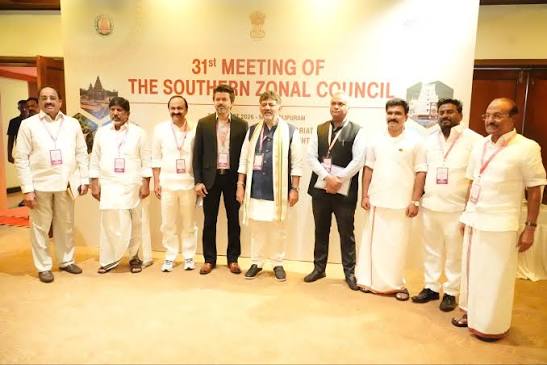
The 31st meeting of the Southern Zonal Council (SZC) was held on 20 August 2026 in Mahabalipuram, Tamil Nadu, under the chairmanship of Union Home Minister Amit Shah. The meeting brought together representatives of southern States and Union Territories to discuss issues related to Centre-State coordination, inter-State cooperation and regional development.
Southern Zonal Council
The Southern Zonal Council comprises:
- Andhra Pradesh
- Karnataka
- Keralam
- Tamil Nadu
- Telangana
- Puducherry
- Andaman and Nicobar Islands
- Lakshadweep
The meeting was organised by the Inter-State Council Secretariat under the Ministry of Home Affairs, with the Government of Tamil Nadu as the host.
Legal Basis
The Zonal Councils were established under Sections 15 to 22 of the States Reorganisation Act, 1956. India has five Zonal Councils:
- Northern Zonal Council
- Central Zonal Council
- Eastern Zonal Council
- Western Zonal Council
- Southern Zonal Council
Key Issues Discussed
The meeting provided a platform to discuss matters concerning two or more States or the Centre and States, including:
- Inter-State water-sharing issues
- Implementation of the Andhra Pradesh Reorganisation Act
- Regional infrastructure projects
- Civil aviation
- Education
- Pradhan Mantri Awas Yojana-Gramin (PMAY-G)
- Implementation of Fast Track Special Courts (FTSCs)
- Other issues requiring Centre-State and inter-State coordination
Standing Committee
The Southern Zonal Council has a Standing Committee at the Chief Secretary level. Issues raised by States are first examined by the committee, while unresolved matters are subsequently placed before the full Council.
Role of Zonal Councils
Zonal Councils are advisory bodies that provide a structured platform for:
- Centre-State dialogue
- Inter-State cooperation
- Discussion of regional issues
- Sharing of best practices
- Building consensus on common concerns
Cooperative Federalism
The Zonal Councils support the idea of cooperative federalism and contribute to the “Team Bharat” approach by encouraging States and the Centre to work together on issues of common interest.
Important Fact
Since June 2014, a total of 69 meetings of various Zonal Councils and their Standing Committees had been held, according to the Ministry of Home Affairs.
Significance
The 31st meeting strengthened the institutional mechanism for Centre-State and inter-State cooperation and provided an opportunity to find practical solutions to regional issues through dialogue and consensus.