
Why in News?
The Indian Army has signed an agreement with the United States to procure Javelin anti-tank missile systems, marking another step in the strengthening of India–US defence cooperation. The financial value of the agreement has not been disclosed.
Key Highlights
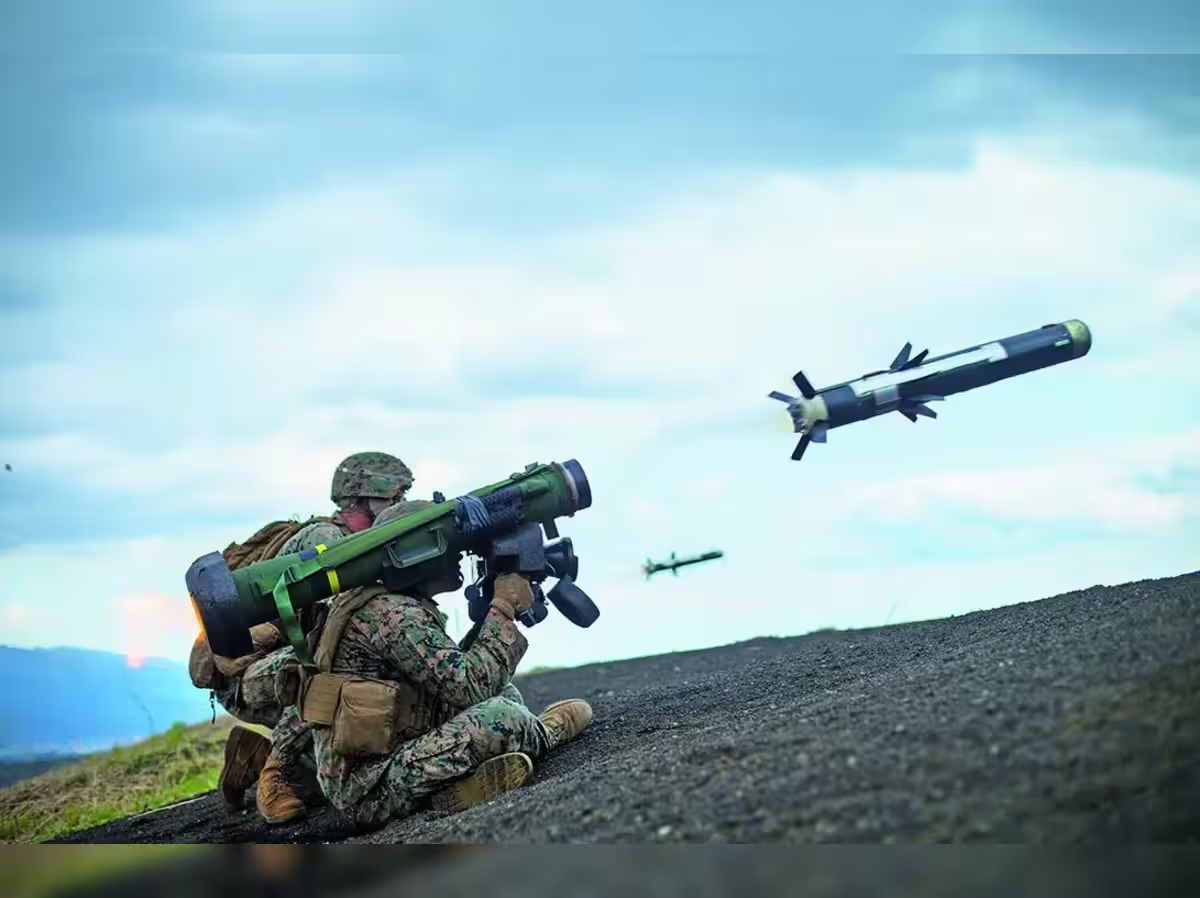
- The FGM-148 Javelin is a medium-range, man-portable anti-tank guided missile (ATGM) system developed by the United States.
- It is jointly manufactured by Lockheed Martin and RTX.
- The system is designed to engage tanks, armoured vehicles and other battlefield targets.
- It features fire-and-forget guidance, allowing the operator to launch the missile and move away without continuously guiding it.
- The Javelin can be shoulder-fired and is designed for deployment by ground forces.
- Its key capability is top-attack, enabling the missile to strike the relatively weaker upper armour of tanks.
- The system is already in service with the US Army and US Marine Corps, besides several international users.
- Its procurement by India is expected to strengthen the Indian Army’s anti-armour capabilities and create further opportunities for India–US defence-industrial cooperation.
India–US Defence Relations
- India and the US signed a 10-year defence framework agreement in October 2025.
- Defence cooperation has remained an important pillar of bilateral relations.
- The Javelin agreement comes despite differences between the two countries over issues such as trade tariffs and India's purchase of Russian oil.
- It reflects the continued importance of defence cooperation within the broader India–US strategic partnership.
Strategic Significance for India
- Strengthening anti-armour capability: The Javelin provides the Indian Army with an advanced capability to counter modern armoured threats.
- Defence modernisation: The procurement supports India's efforts to modernise its armed forces with advanced military technologies.
- Strategic partnership: The deal deepens defence and security cooperation between India and the US.
- Defence-industrial cooperation: It can create additional opportunities for collaboration between the defence industries of both countries.