Why in News?
India has rejected a recent ruling by a Hague-based Court of Arbitration on the Indus Waters Treaty (IWT), 1960, stating that the body has no jurisdiction to pronounce on India’s sovereign decisions.
What is the Indus Waters Treaty?
- The Indus Waters Treaty was signed in September 1960 between India and Pakistan, with the World Bank playing a key role in brokering the agreement.
- The treaty governs the use of the waters of the six major rivers of the Indus basin.
The rivers are divided into two groups:
- Eastern Rivers: Ravi, Beas and Sutlej — allocated primarily for India's unrestricted use.
- Western Rivers: Indus, Jhelum and Chenab — allocated primarily to Pakistan, while allowing India certain specified uses, including hydropower generation subject to treaty conditions.
Why is the Treaty Facing a Dispute?
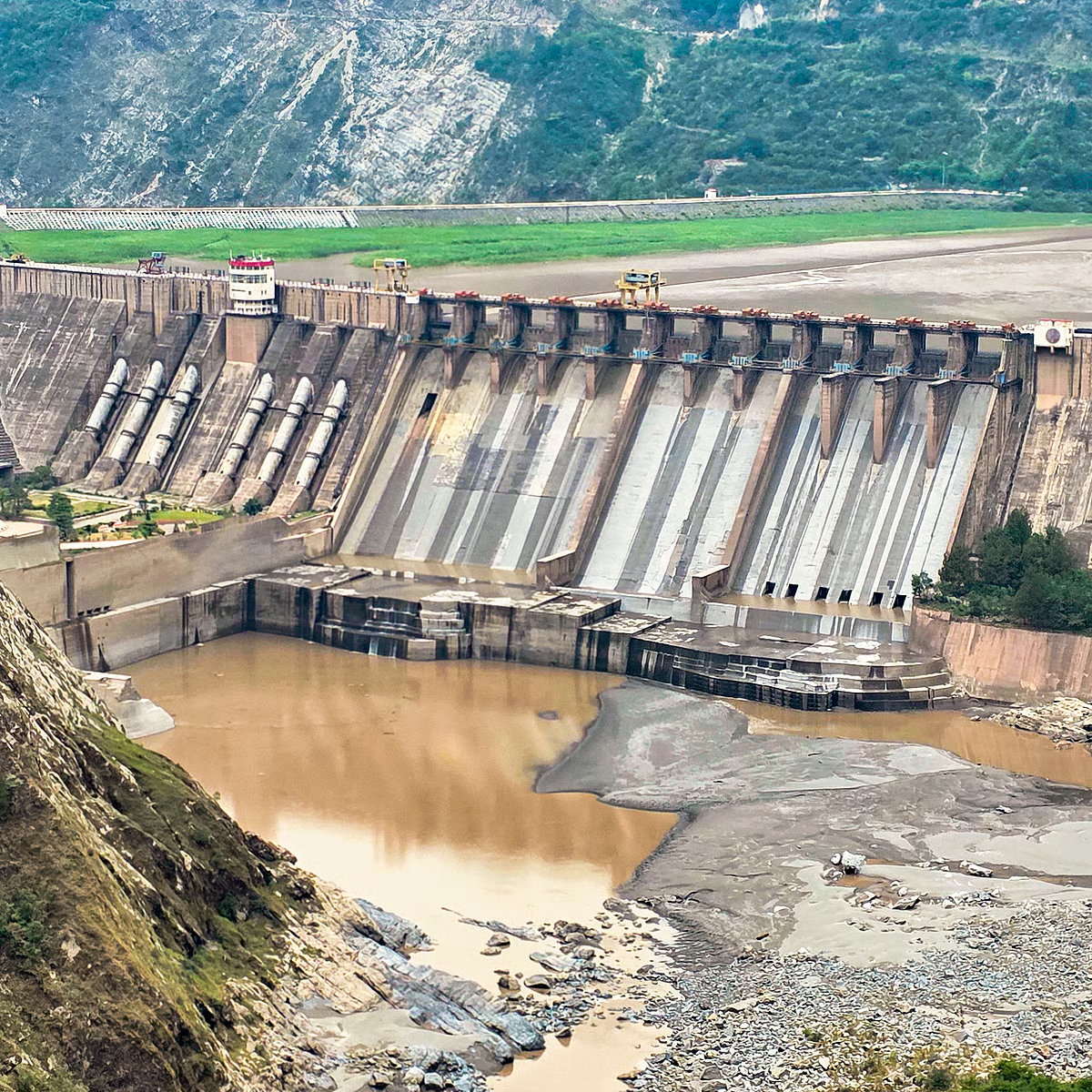
- The present dispute is linked mainly to India's Kishenganga and Ratle hydroelectric projects, located on the western rivers.
- Pakistan has raised objections regarding aspects of the design of these projects, arguing that they could affect the flow and use of waters available to Pakistan.
- India maintains that the projects are permitted under the treaty and that its use of the western rivers for specified purposes, including hydropower generation, is consistent with the agreement.
- The disagreement has consequently moved beyond water allocation to the interpretation of the treaty's dispute-resolution mechanism.
India's Objection to the Court of Arbitration
- India has opposed the arbitration proceedings from the beginning.
- New Delhi argues that the disputes concerning the Kishenganga and Ratle projects are essentially technical in nature and should be examined through the Neutral Expert mechanism provided under the Indus Waters Treaty.
- India has objected to the simultaneous involvement of a Court of Arbitration, arguing that allowing two parallel processes to examine substantially similar issues is inconsistent with the dispute-resolution framework established by the treaty.
- India has therefore maintained that it does not recognise the Court of Arbitration constituted for these proceedings.
What did the Hague-based Court Rule?
- The Court of Arbitration ruled that the Indus Waters Treaty remains binding and that India had no valid grounds for ending or suspending the agreement.
- It also directed India to restrict certain construction activities related to the Ratle Hydroelectric Project pending further proceedings.
- India has categorically rejected the ruling, stating that the so-called Court of Arbitration has no jurisdiction over India's sovereign decisions.
- According to the Ministry of External Affairs, the body was constituted in violation of the treaty's provisions, and its pronouncements will have no effect on India's actions concerning its projects.
India's Decision to Hold the Treaty in Abeyance
- Following the Pahalgam terror attack on 22 April 2025, India announced several measures against Pakistan, including putting the Indus Waters Treaty in abeyance.
- India has linked the continuation of this position to Pakistan taking verifiable and irreversible action against cross-border terrorism.
- India has reiterated that its decision to keep the treaty in abeyance remains in force, despite the arbitration ruling.