
Why in News?
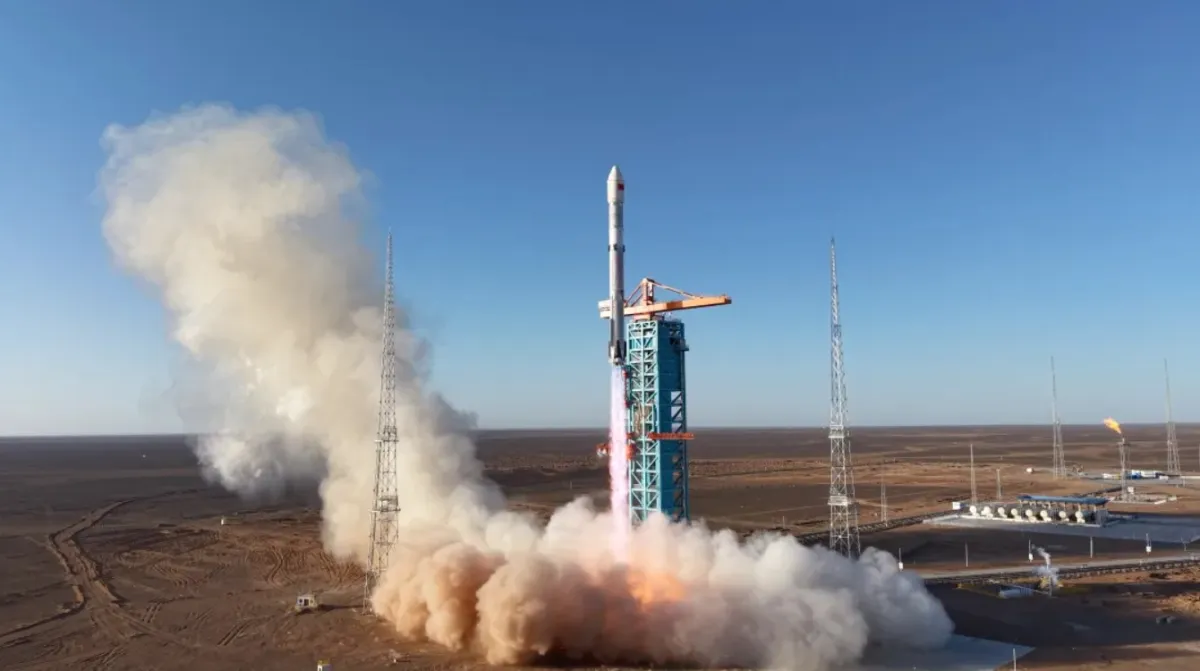
Chinese private space company LandSpace successfully launched and recovered the first stage of its Zhuque-3 reusable rocket on 19 August 2026. The achievement marks an important step in China’s growing reusable-launch vehicle programme and strengthens its position in the global commercial space sector.
Key Highlights
- Zhuque-3 was launched from the Dongfeng Commercial Space Innovation Pilot Zone in northwestern China.
- The rocket entered orbit before its first stage successfully returned to a designated landing site in Gansu province, about 242 miles from the launch site.
- This was LandSpace’s second attempt to recover the Zhuque-3 first stage. Its earlier attempt ended in failure.
- Zhuque-3 is designed as a reusable rocket, similar in concept to SpaceX’s Falcon 9.
- The rocket is 66.1 metres tall and uses a stainless-steel structure.
- It can carry around 14.2 tonnes to Low Earth Orbit (LEO).
- The rocket is designed for up to 20 reuses.
- In comparison, SpaceX’s Falcon 9 can carry about 22.8 tonnes to LEO and has achieved significantly more booster flights.
- The successful recovery adds to China’s recent progress in reusable launch technology, following the recovery of a Long March 10B first stage in July 2026.
Significance
- The successful recovery of Zhuque-3 highlights China's efforts to develop cost-effective and reusable launch systems. Reusable rockets can reduce launch costs and improve the frequency of space missions.
- The development is also significant in the wider US-China space competition, particularly in satellite launches, lunar exploration and future space infrastructure.
China’s Lunar Plans
China aims to conduct a crewed Moon landing by 2030. It has also developed the Lanyue lunar lander and plans to use two Long March 10B rockets for its first crewed lunar landing mission—one for the crew spacecraft and another for the lunar lander.