
Why in News?
Bihar and Jharkhand have finally reached an agreement on the sharing of Sone River water, ending a dispute that had continued for nearly 25 years after Jharkhand was separated from Bihar in 2000.
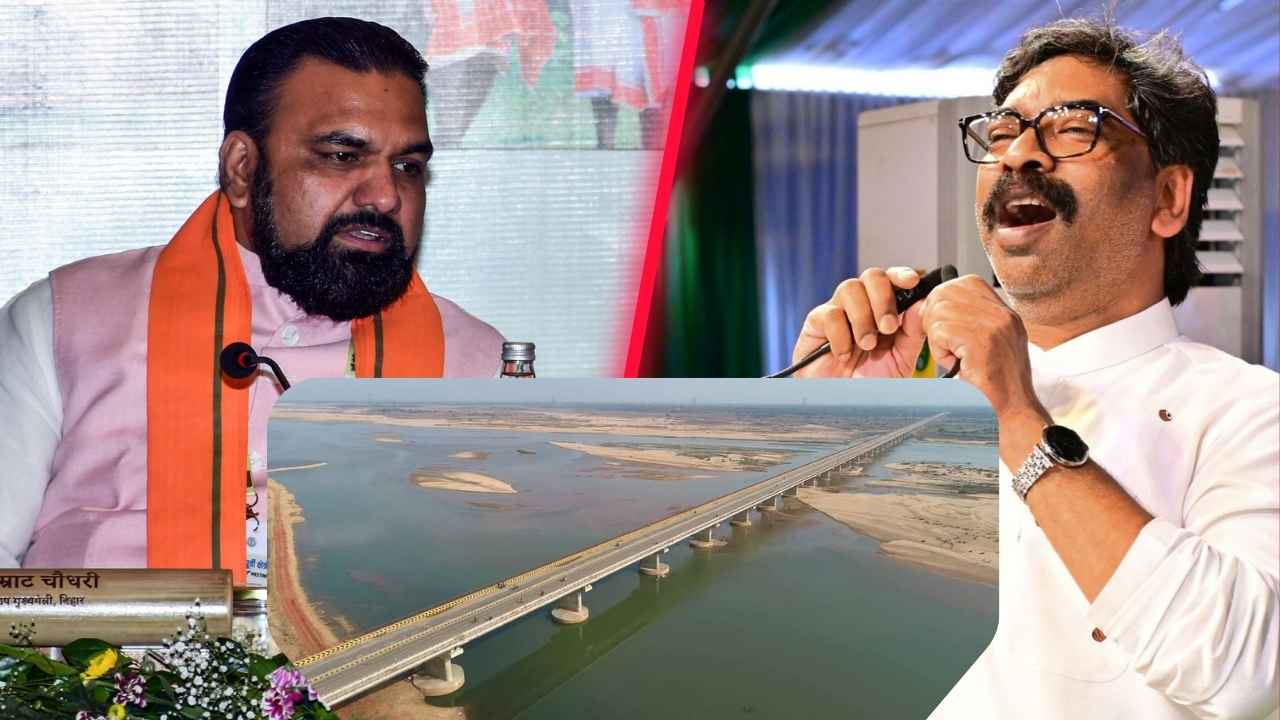
The agreement was signed in New Delhi on 31 August 2026 by Bihar Chief Minister Samrat Chaudhary and Jharkhand Chief Minister Hemant Soren. It settles how the water share originally given to undivided Bihar under the 1973 Bansagar Agreement will be divided between the two states.
Key Highlights
- Under the 1973 Bansagar Agreement, undivided Bihar had been allocated 7.75 million acre-feet (MAF) of Sone River water.
- Under the new arrangement:
- Bihar will receive 5.75 MAF
- Jharkhand will receive 2.0 MAF
- The formula is based on the unanimous recommendation of a committee headed by the Central Water Commission (CWC).
- The Centre played an important role in bringing both states together to resolve the issue.
- Discussions were also held through the Eastern Zonal Council, which works under Article 263 of the Constitution.
- The agreement removes a major obstacle to the proposed Indrapuri Reservoir Project in Rohtas district of Bihar.
Background: Bansagar Agreement, 1973
- The Bansagar Agreement was signed in 1973 by Madhya Pradesh, Uttar Pradesh and undivided Bihar for sharing the waters of the Sone River.
- At that time, Jharkhand was part of Bihar. Therefore, Bihar had received the entire 7.75 MAF share under the agreement.
- The situation changed after Jharkhand was created as a separate state in November 2000. Although the Bansagar Agreement remained in force, there was no agreement on how Bihar's original water share should be divided between Bihar and Jharkhand.
- The issue remained unresolved for almost 25 years, with both states having different demands and concerns.